

A story from 998
The Green Hour
She left me her house, a key on a brown tag, and one rule: not the track, not in the hour.
The key came on a brown card tag, the kind you tie to a suitcase handle. On one side, in my great-aunt’s small upright hand: A. Marle, the orchard end. On the other, in green ink gone grey at the edges: Not the track. Not in the hour.
Mrs Aske from next door gave it to me at the gate. She must have had it in her coat pocket since the afternoon, waiting for my headlights, because when it passed into my hand it was warm. She watched me turn it over the way you watch someone open a present you already know they won’t like.
“She’ll have meant the green hour,” she said, as if it were a bus.
I had come to 998 to clear the house. I was the nearest thing Ada had to family, which is to say I had met her twice, both times at funerals. I found the street after dark, which I’m told is the only way anyone does, and in the morning I saw what she had been looking out at for more than fifty years.
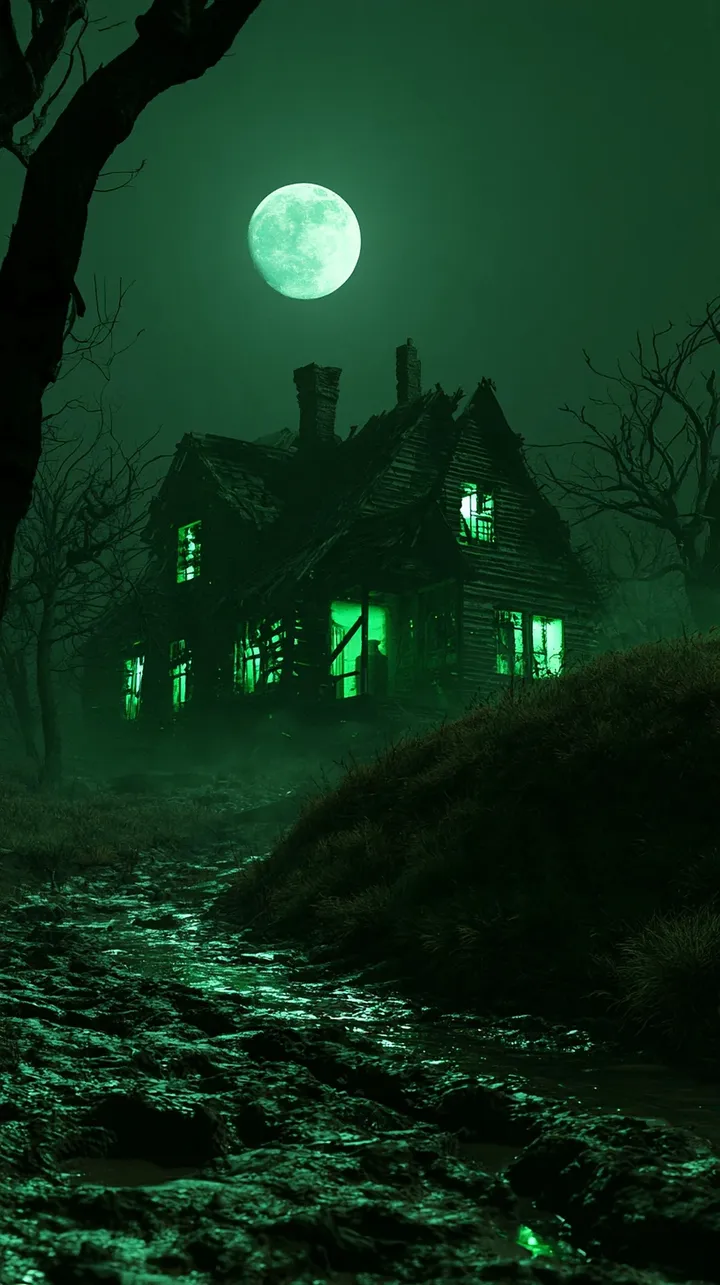
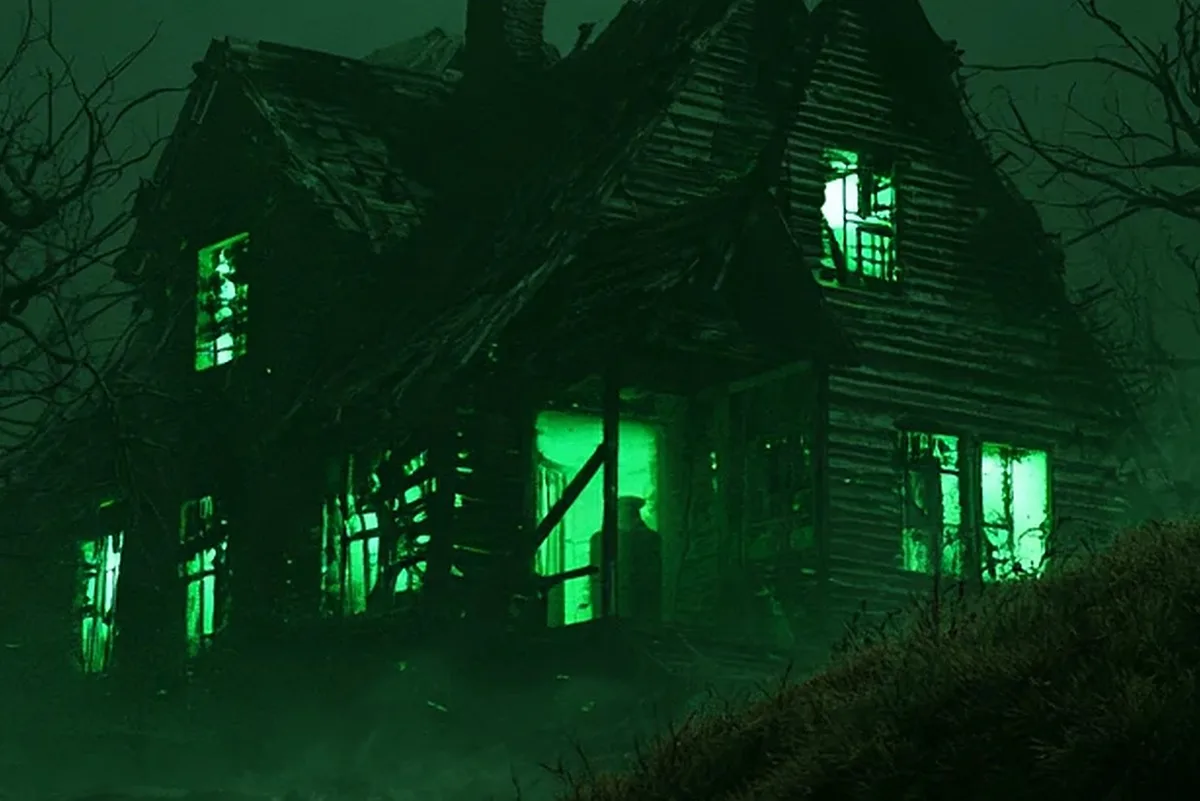
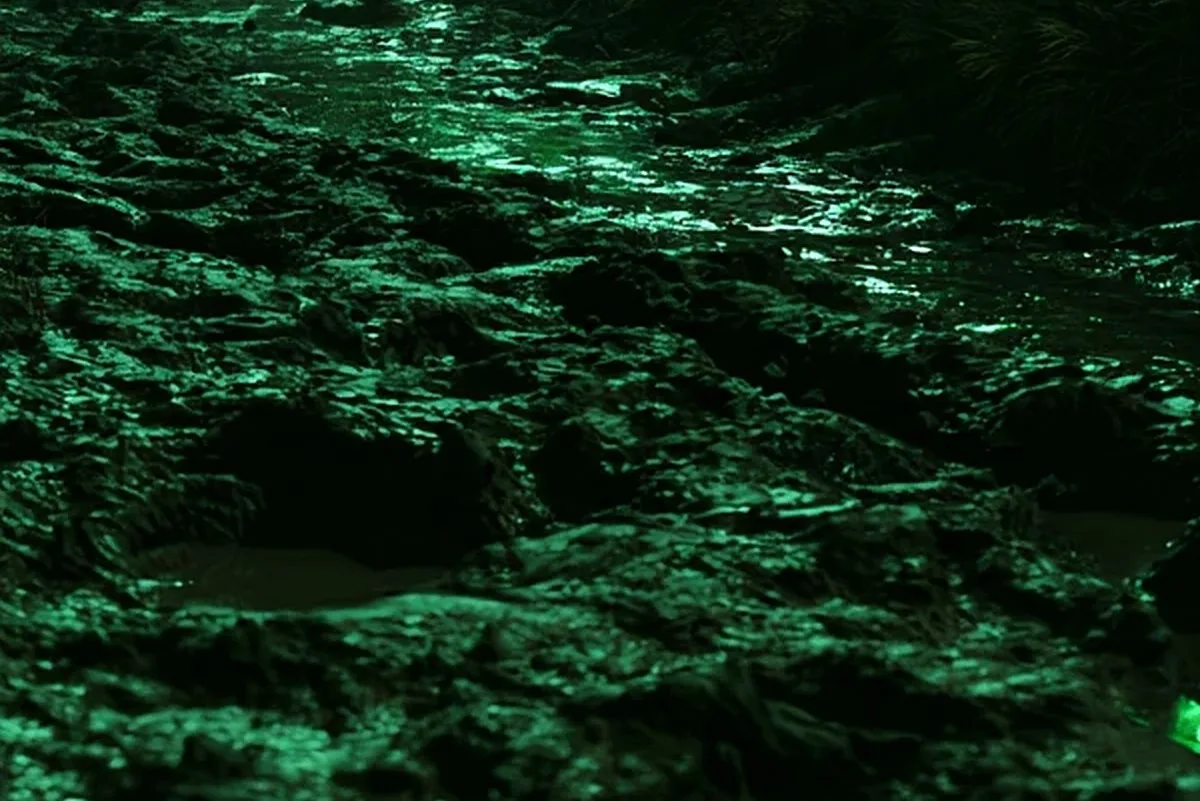
Across the lane, past the last of the apple trees, the ground lifts into a rough, grassy rise, and on the rise there is a house. By daylight it is a ruin and nothing more: grey clapboard, a roof that sags in the middle like a tired back, two chimneys leaning away from each other as if they have stopped speaking. A track runs up to it from the lane, two ruts of clay that never quite dry.
Mrs Aske came out while I was standing at the back gate, looking at it. “Once a year the moon comes up green,” she said. “Nobody knows which night until it does. For an hour that house lights every window, and the door stands open, and there’s somebody in it.”
I asked who.
She looked at the rise rather than at me. “Nobody you’d know,” she said.
Then she went indoors, and in the middle of a bright October afternoon I heard her draw the bolt.
Ada’s house smelled of apples and cold ashes. I spent the first days doing what you do: bags for the charity shop, bags for the tip, a box for the things I couldn’t decide about. The box filled faster than the bags.
Every curtain on the side facing the rise was lined with blackout cloth, and down each edge the window frame was peppered with tiny holes, grey and soft, like woodworm. Drawing pins. She had pinned her curtains shut against that hill, one night a year, for longer than I had been alive.
All except the kitchen. The kitchen curtain had a hole cut in it at the height of a seated woman’s eyes, about the size of a ten-pence piece, and she had hemmed it. Small, even stitches, all the way round, so it wouldn’t fray. In front of it stood a kitchen chair with a flattened cushion, and on the sill a pair of opera glasses in a cracked leather case.
On the hook by the back door hung a man’s overcoat, dark wool, brushed so often the nap had worn thin across the shoulders. Ada was barely five foot. It would have reached her ankles. In one pocket I found a pencil stub and a bus ticket dated the fourteenth of October, 1974. Under the coat stood her wellingtons, small and otherwise clean, with pale clay dried on the toes. Only on the toes.
The calendars were in the sideboard drawer, tied in bundles with kitchen string. Fifty-two of them. In each one a single night had been circled in green, a different night every year, always somewhere between the apples falling and the first frost. In 1974 the circle was round the fourteenth of October, and beside it she had written one word: Walter. In every year after that, the same two.
Not yet.
Mrs Aske told me the rest over the fence, snapping the dead heads off her hydrangeas while she talked.
“Walter went up in seventy-four,” she said. “Wanted to see who it was.”
“And did he?”
“Well,” she said. “The year after, she knew who it was.”
She snapped another head off and dropped it in her apron pocket.
“She could have fetched him home any year she liked.” She didn’t look up. “Only ever the one in the door, mind. Never two.”
There is no such thing as a green moon. I had looked it up on my first night, on a phone that found one bar of signal and lost it again halfway down the page, and I had been glad of the half I got.
It came on my ninth night.
The orchard let go of its apples all at once, a long soft drumming in the dark, like someone walking about in the grass who didn’t care who heard. Mrs Aske’s dog stopped barking in the middle of a bark. And the clock on the kitchen wall stopped. It didn’t run down. It stopped, at ten to eleven, the second hand trembling where it stood, like a hand that has been told to wait.
Then the gap under the curtain went green.
I should say that I had not meant to watch. I had gone round the house pinning the curtains into her old holes. But the chair was there, and the hole was there, hemmed, and I had spent nine days learning that I did most things the way Ada had done them, in the same order, because the house was arranged for nothing else.
So I sat, and I looked.
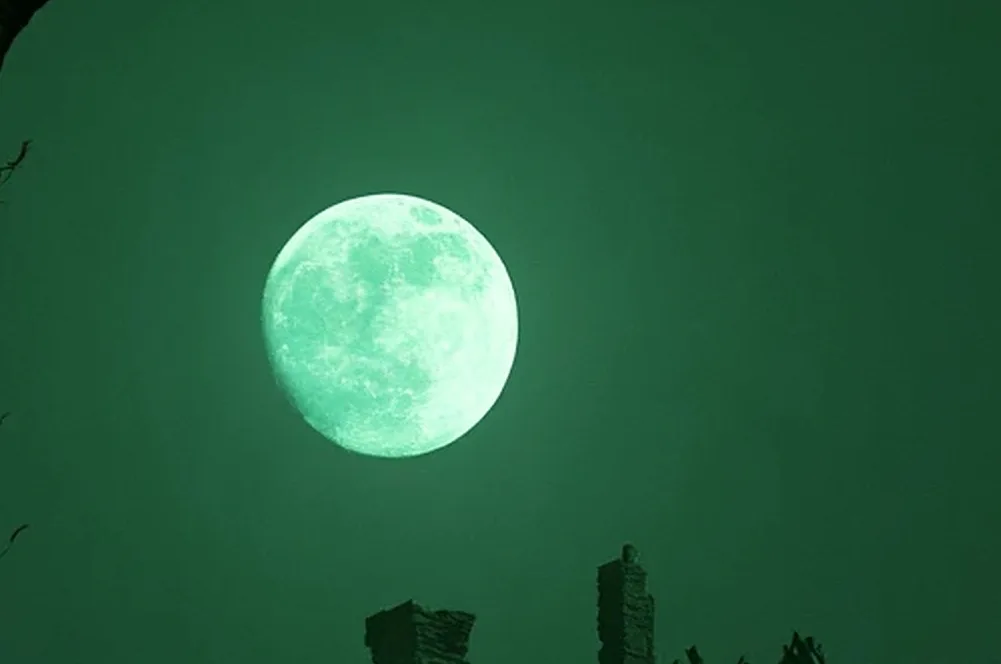
The moon stood over the rise, round and much too clear, the pale, sour green of a bottle held up to a lamp. Under it the house was lit in every window, upstairs and down: an acid green with no flicker in it, hanging perfectly steady, like the light in an empty aquarium. Mist lay in the orchard. The track shone. Every rut held a line of green, all the way up from the lane to the step.
And the door stood open, and there was somebody in it.
I leaned back from the hole. The light came through it in a single round beam, past my cheek, and landed on the far wall behind me, on a patch of paper where the printed roses had faded to the colour of pond water. It was a perfect circle, and it fitted the beam exactly.
I was not the first to lean back.
After a while I put my eye to the hole again.
It was tall, taller than Ada by a head and a half, and it stood a little to one side of the doorway, the way a man stands when he is holding a door for someone. One hand was up on the frame. There was a stoop in the shoulders, the kind you get from years of ducking under low beams, or from waiting.
For a long time it didn’t move. Neither did I. The opera glasses were in my lap and I didn’t lift them. I found I didn’t want to see it any closer than the hole allowed, and the hole had been cut, I suppose, by someone who had decided exactly how close that was.
Then it raised its other hand and held it flat against its brow, the way you shade your eyes to look down a long road.
There was nothing to shade them from. All the light was behind it.
It was looking down the track. It was looking, I was fairly sure, for one small woman in wellingtons to come up between the ruts at last. It had stood there doing that fifty-one times before, and nobody had thought to tell it that she died in April.
I don’t know when I stood up.
I know that at some point I was at the back door, and the bolt was cold under my hand, and I was wearing Walter’s coat. It smelled of wet wool and pencil shavings. The sleeves came down over my knuckles. I have no memory of taking it off the hook. I only remember thinking, quite calmly, that it was the nearest coat.
I took it off. I hung it back where it belonged. I went back to the chair and sat on my hands, which is not something I had done since I was a child.
At the end of the hour the windows went out one at a time, top floor first, like someone going round a house at bedtime. The door was last. The shape lowered its hand, and then there was only the lit doorway, and then there wasn’t.
Behind me, the kitchen clock began to tick again. Ten to eleven. As if it had only blinked.
In the morning my boots were standing by the back door, where I’d left them, with pale clay dried on the toes.
Only on the toes.
I remember the bolt. I don’t remember the gate. But across the lane, where the track begins, there were two prints at the very edge of the clay, side by side and pointing uphill. Toes only, pressed in deep, as if someone had stood at a kerb and leaned out to see whether the bus was coming. They went no further. They were mine.
Mrs Aske was at her fence with a basket of windfalls. She didn’t ask whether I had watched. She looked at my boots.
“She used to get that far,” she said. “Every year. Never a step further.”
“Somebody ought to tell him,” I said.
She looked at me the way she had at the gate, when she gave me the key. Then she took her windfalls indoors, and I heard the bolt.
This year’s calendar was still on its nail by the dresser. Ada had hung it there in January, and it was still turned to April. I turned it to October. Her green pen was in the drawer with the string. The nib had dried, and it took a while to make it write.
I circled last night. Then I sat with the pen over the page for a long time, trying to think of something else to put.
Not yet.
The end.